
Playing chess and backgammon offers more than just entertainment. These games have been scientifically proven to help with mental health. According to research by Harvard University, playing these strategic board games can help combat cognitive decline.
Besides improving your brain power, playing chess and backgammon can mirror the real-life struggles to survive. Like a player, one wise decision can lead to victory, while a careless step can change your fate. Let’s say life is one big board game.
This article discusses how playing these strategic board games can help you live a better life. You don’t have to attend classrooms or lectures to learn these priceless life lessons. Below are nine powerful life lessons that playing chess and backgammon can teach you:
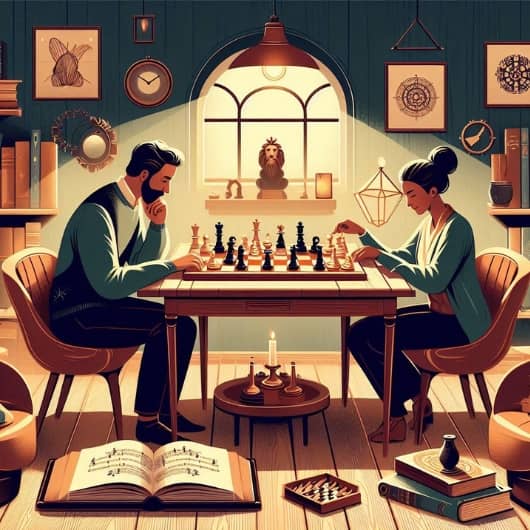
Life Lesson #1: Patience is Key to Success
In chess and backgammon, making rash decisions can be costly. The best players must learn to remain calm and patient even when facing a bad sequence of results. Sometimes, the dice roll in a backgammon game may not favour your long-term strategies. So, instead of rushing to attack, you can maintain a solid position and wait for your opponent to show a weakness.
The same analogy applies to real-life scenarios. Lack of patience can lead to costly blunders, which in turn can make you miss rare opportunities. Therefore, you must learn how to delay gratification in the modern world, where everyone craves instant success. You can achieve that by creating a wish list of the things you want to do.
Priest Holmes, former NFL running back, once said: “Chess is a time game; it’s a game of patience. That pretty much defines how I run the ball.”
Life Lesson #2: The Best Players Don’t Always Win
If you’re an avid chess player, you must have witnessed several scenarios where grandmasters get floored by greenhorns. Here’s the thing: chess is a game of skill 100%. However, the human element can add a new dimension to the game. Factors like fatigue, blunders, and overthinking situations can lead to unexpected losses.
Here’s an example: in 2024, an 8-year-old player called Ashwath Kaushik defeated a 37-year-old grandmaster to set a new world record. This record didn’t last a week after an 8-year-old from Serbia (Leonid Ivanovic) beat the 59-year-old Bulgarian grandmaster, Milko Popchev.
These real-life stories prove that proper planning and a little luck could be all you need to overcome obstacles. Those who made it to the top of their hobby or profession didn’t just get lucky. Instead, these people worked hard in planning and executing strategies. It’s all about believing you can transform a loss into a win.
Life Lesson #3: Adapt and Learn Quickly
Chess and backgammon are some of the most dynamic games out there. These games require players who can quickly analyse situations and maximize the best opportunities. Most players often re-evaluate their strategies based on their opponent’s moves and dice rolls.
On top of that, the best chess players can bluff to get experienced opponents off their backs. For instance, you can play Nc3 to invite Nizmo. The idea is to dare your opponents to make a particular move if they ‘ask’ for it. And it works in some cases!
Similarly, life requires you to adapt quickly to specific challenges and circumstances. Take time to study life situations and create a solution to the problem. Sometimes, you may need to be a little witty, like a bluffing chess player. Every challenge or loss is a great chance to learn and improve.
Life Lesson #4: Learn to Handle Losses or Defeat
All chess and backgammon players come to the table with one thing in mind – to win! Sometimes, these players can be more skilled than you, limiting your chances of winning. For this reason, it’s vital to avoid getting knocked out by defeats. Defeats, just like in life, are part of the game.
The earlier examples prove that even the best board game players can lose to beginners. Likewise, these players can also go on a winning streak. However, don’t be overconfident in winning in life to avoid disappointments. Some people suffer from emotional breakdown after a few defeats.
Like a board game player, learn to handle defeats and rejections. Take your defeats with a stride and strategize for a comeback. This can help you build resilience, humility, and adaptability. Moreover, a graceful response to losses shows integrity, which can unlock hidden opportunities.
Life Lesson #5: Be Prepared to Take Calculated Risks
Nobody wants to lose, whether in life situations or playing backgammon. However, sometimes the best response is to let your guard down temporarily. The most skilled chess players can leave some pieces open to get hit. The idea is to give up something to maximize your gains.
For example, you can expose your pieces to a rival’s weak side. Of course, they may find this ‘offer’ pretty irresistible. So, if they hit, they may be forced to split a point. In return, this can open the door for your counter-attack. Just make sure you don’t expose their dream targets.
Similarly, the best stuff in life could be outside your comfort zone. The modern world consistently throws you curveballs until you learn to hit them. You must take risks to achieve your goals. Here’s the truth: the greatest risk to yourself is not taking one. It’s a give-and-take society!
Life Lesson #6: Keep Your Emotions in Check
Like any other backgammon or chess player, your mood can change depending on the game’s outcome. That’s unavoidable because most players invest emotions in these games. And yes, winning is part of human instincts.
However, keep in mind that moods can change, but the game rules remain the same. Your mathematical probability of winning or losing also remains constant. Therefore, wearing a sad face and stressing yourself can negatively impact your gaming strategy.
In life, you can experience a streak of losses and rejections. Instead of sulking and giving up, return to the drawing board to know what happened. While at it, don’t be afraid to walk away from bad situations before you lose everything. Remember, being emotionally stable is vital when making life decisions.
Life Lesson #7: Learn How to See Ahead
There have been several cases of upcoming players outsmarting chess grandmasters. It’s not that the experienced players are losing their knowledge of the game. Instead, these newcomers can spot your beat and overconfidence from the first few moves.
Once the underdog knows the grandmaster’s playing style, they can anticipate the next moves and make counter decisions. No one comes to a chess or backgammon table with a clear plan for handling their rival’s next 20 or 30 moves. It’s all about reading situations in advance.
The takeaway is that you must analyse situations before making decisions. For instance, cryptocurrency investors don’t make trading decisions based on yesterday’s price surge. Instead, these professionals can wait two or three days to study market movements. Don’t rush to make long-term life decisions to evade those avoidable mistakes.
Life Lesson #8: Everyone Makes Mistakes – Don’t Quit Just Yet
Many people quit without trying. As mentioned before, the modern world glorifies immediate success over long-drawn hard work. But regardless of the challenges, quitting isn’t always the solution. Giving yourself a fair chance to shoot at success is vital before raising the white flag.
Look at Florida Panthers in the NHL, for example. This team had to wait over a decade to win its first Stanley Cup in the 2023-24 season. They went ahead to defend the title successfully in the 2024-24 season. That proves that success can overflow with hard work and consistency.
Like a chess or backgammon player, don’t resign early, especially when playing an intermediate or beginner opponent. All players are sure of making mistakes, which can change the dimension of the game. Throwing in the towel too early could result in missed opportunities.
Life Lesson #9: Luck Plays a Significant Part in Everything
Okay, this is something that most of you will not want to hear. After all, you spend years in school and planning your life to succeed. That’s the case of a chess player. This classic board game has no random events like throwing the dice or drawing cards. Only tactical thinking and strategic decisions matter.
However, life is more similar to backgammon than chess. The random and unpredictable dice rolls introduce an element of luck in this board game. Meanwhile, skill and success can determine your long-term success. You can encounter good luck or bad luck. What matters is to play your strategic part and hope for a bit of luck.
The Bottom Line
These are some invaluable life lessons drawn from playing chess and backgammon. After all is said and done, one thing that stands out is that you need a strategic approach to mitigate life’s complexities. Having a proper plan coupled with patience, resilience, and a bit of luck can position you on the path to success. Most importantly, learn from wins and losses in both spheres.
Gaming Expert with extensive experience in the industry, both online and offline, Stephen Abiola is a passionate writer with a proven track record of creating content. His main areas of specialty include reviews, sports guides, bonus articles, and much more. So far, he has written thousands of gaming-related articles and hopes to create more content to help new and existing players learn tips on how to win. During his spare time, Stephen plays video games and monitors the happenings in NFL, NBA and EPL.