
In Arab culture, al mukhāṭara, or risk-taking, is not just about gambling or chance; it is a part of Arab stories, business ventures, myths, and everyday decisions. But what does risk exactly mean, and how does it differ from recklessness? How has Arab culture treated risk, failure, and success? Why is this adventurous spirit part of the culture’s wisdom? From ancient Bedouin tales to modern business moguls, Arabs have long celebrated the art of risk. It’s an instinct rooted in their culture, poetry, religion, and survival history.
Let’s take a look at why risk-taking is not just a choice in Arab culture, but a way of life.
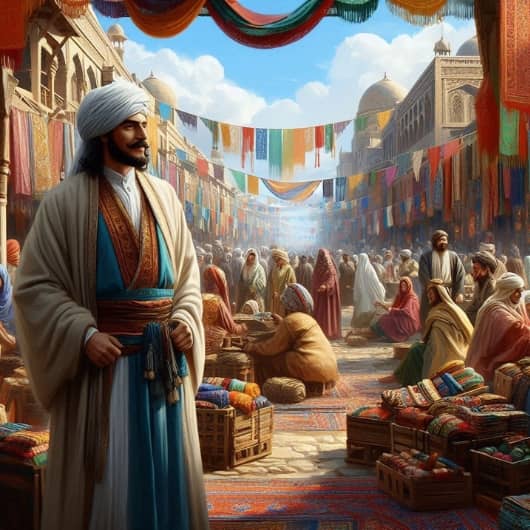
The Meaning of Risk: Al Mukhātara
To understand Arab risk-taking, it’s important to draw the line between mukhāṭara (risk) and al-tahawur (recklessness). Risk comes from making wise consultations driven by vision (ru’yah), while recklessness comes from haste (ajalah) and pride (kibr).
Let’s take an example: Think of a young Arab trader on a caravan journey moving across the desert in the 6th century. This journey would be riddled with danger, however, he would have mapped out the desert, stocked enough food and water and when it comes to the unknown, he has trusted his instincts, his camel, and the blessings of Allah. That’s al-mukhāṭara.
But a trader who ignored weather signs, set off alone, and mocked others for being careful is guilty of al-tahawur. The difference lies in intention and preparation. Arabs see risk as a noble act when guided by wisdom, but they frown upon blind arrogance.
Risk-taking in Arab Culture
Desert life can be described as the origin of risk-taking in Arab culture. The Bedouin tribes who roamed the desert had to adapt and stick to their courage. The harsh environment gave two simple choices, “adapt or die”, which forced them to make brave decisions. From migrating into unknown lands, facing sandstorms, or hunting with limited resources, you could say they put in the work
A well-known Bedouin proverb quotes, “Al-khatar fi al-safar, wal-safar fi al-hayat”, meaning “Danger is in travel, and travel is in life.” This simply means, life itself is a journey through uncertainty, and the brave are those who walk it with faith. This reflects how the desert shaped the Arab view of risk:
Now, let’s take a look at Arab legends. Yes, risk-taking takes an integral part of Arab legends, and a famous one most Arabs know is like Hatim al-Tai, a legendary pre-Islamic Arab renowned for his generosity and courage. In this legend, he famously gave away his prized horse to a stranger, which put his family’s survival at risk. Yet, in Arab storytelling, this act wasn’t seen as foolish rather it was noble. It taught that risk, when taken for honor (sharaf) or generosity (alkarm), elevates one’s soul.
The Wisdom Behind Taking Risks
In Arab philosophy, wisdom and risk go hand in hand. The poet Al-Mutanabbi once wrote, “If you venture not for glory, then remain content with humility.” This line captures the Arab belief that greatness requires mughāmarah.
Wisdom in taking risks is all about knowing when and how to act. In business, this could be making an investment in innovation and in life, it might mean following one’s passion despite being uncertain. The Arab elder’s advice often sounds like this: “Khalik shujaa’, bas ‘aqlan” which is interpreted to “Be brave, but be wise.”
This cultural blend of courage and contemplation gives Arab societies their distinctive rhythm. It is bold yet thoughtful, daring yet faithful.
At the heart of Arab storytelling is a love for uncertainty. When it comes to desert journeys, love tales, and business ventures, they all share that uncertain feeling of not knowing how they’ll end. Yet, the process is met with celebration, not just the outcome.
The tales of risk do extend to music and poetry, which you must agree do depict themes of chance, fate, and destiny. They remind people that life itself is a risk, an adventure. To live without risk is to live without the taste of flavor, which would unpleasant.
Modern Arab business leaders continue the legacy of al mukhāṭara. The story of Sheikh Mohammed bin Rashid Al Maktoum, the visionary behind Dubai’s transformation is one that has been told for generations to just about anyone. When he made a speech about building Palm Jumeirah and Burj Khalifa, many thought it was the words of a mad man, an impossible feat that was out of league. Truly, their fears were not without reason,, the desert city was nothing but a small trade hub with scorching heat and very little water. But the Sheikh saw opportunity where others saw sand.
That is the Arab version of risk-taking. It is bold, imaginative, but deeply strategic. Dubai’s rise to a megacity easily lays out the story of risk of even the simple minds. It is a modern reflection of ancient desert wisdom. So, is there a lesson here? Of course there is, it tells us that success belongs to those who take smart risks and trust destiny to reward their effort.
Another famous example that will go into the history books is the Qatari investment in global sports, specifically with the hosting of the FIFA World Cup 2022. This was an enormous risk, no doubt, both for the country and the organization both financially and reputationally. But it paid off, turning Qatar into a global name in sports tourism and innovation.
In Arab culture, such boldness is not seen as gambling rather it’s viewed as visionary courage. It’s about tawakkul (placing your trust in God) after doing your part.
Risk and Religion: The Balance Between Faith and Action
Islamic teachings have a say when it comes to risk. The Prophet Muhammad (peace be upon him) once said, “Tie your camel, then trust in Allah.” (I‘qilha wa tawakkal). This saying completely captures the balance. It means prepare wisely, then let faith guide you through uncertainty.
In Arab society, this quote is a part of sports games, business meetings, and even family decisions. It puts people at ease, telling them that taking risks is not sinful, but a part of being human. What matters when taking risk is intention, preparation, and faith.
The Quran itself celebrates those who act courageously for good causes. Risk, in this sense, is not just financial, rather it’s moral and spiritual. Whether it comes to helping a neighbor in danger or speaking truth to people in power, Arabs believe that risk taken for righteous reasons brings divine blessing.
Myths and Legends of Risk: The Heroes of the Desert
Arab folklore is not without its own tales that relate to risk. It tells the stories of individuals who have defied the odds and taken risks. There is Antarah ibn Shaddad, the fearless warrior-poet, who is forever engrained in history. Then there is Scheherazade, the intuitive storyteller of One Thousand and One Nights. Arab tales do not shy away from giving praise to people who face danger with wisdom.
Scheherazade’s risk wasn’t physical, it was an emotional and intellectual decision that would be described as madness. She volunteered to marry a king who proudly executed his wives every dawn. Her weapon? Stories. Even though she her life was at risk every night, she used her intelligence to survive and eventually change the king’s heart.
This legendary act embodies the Arab idea that hikmah (wisdom) is the best form of courage. Risk without wisdom is suicide, but risk guided by intellect is victory.
Risk in the Arab City: From Trade Routes to Modern Towers
Cities like Mecca, Baghdad, and Damascus are evidence of the risk-taking ventures of the Arabs. Mecca was merely a small oasis before traders took the initiative of traveling with spices and goods across the Red Sea routes. Under the Abbasids, Baghdad was transformed into a center of science and culture because the Caliphs risked investing in scholars from distant lands.
Today, Riyadh and Abu Dhabi mimic the efforts of the past and have been developed through ambitious economic visions like Saudi Vision 2030 and the UAE’s space programs. The latter involved sending a probe named Al-Amal (meaning “Hope”) to Mars, which was one of the boldest Arab ventures in recent history. It wasn’t just science; it was a message to the world that Arabs still dare to dream big.
How Arabs View Failure and Success
Failure, in Arab culture, is not a shame when it comes from sincere effort. There’s a saying, “Man la yughāmir, la yanfaz” which means “He who doesn’t take risks, doesn’t advance.”
Failure is seen as a teacher. In fact, many Arab entrepreneurs tell stories of their failed startups with pride, calling them dourus al-hayat or “life lessons.” It reflects a growing cultural shift where risk and failure are not opposite to success but steps toward it.
The Arab respect for persistence goes back to the days of camel caravans, when losing one trade route didn’t stop the next journey. This patience and resilience, combined with faith, form the backbone of the Arab spirit of al mukhāṭara.
Areas Where Arabs Take Risks Today
In today’s Arab world, risk can take many forms:
Business & Entrepreneurship
Launching new companies, investing in sectors beyond oil, tech, tourism are big business ventures Arabs partake in today. But why is there a risk? Because the payoff can be huge. Arab culture supports reputation, legacy, and growth. The risk shows ambition, courage Yet the risk is real. There are always regulatory hurdles, cultural expectations, and large family stakes with every business venture. The Arab entrepreneur must balance courage and caution.
Migration & Education
Another form of risk is the Arab youth going abroad for education, or moving to cities from villages, leaving stability for possibility. Culturally, this can be frowned on but is also part of mughāmara, an adventurous narrative.
Social & Cultural Risks
Tackling social taboos, launching creative ventures, art, culture tend to be very risk in the Arab world. One example is Suleiman Bakhitd, a Jordanian entrepreneur who risked his reputation and safety by producing Arab‐superhero media. His actions show risk by venturing beyond tradition, challenging norms, and innovating.
Final Thoughts: The Heart of Al Mukhātara
Risk-taking is not foreign to Arab culture, it’s in the bloodline, a part of legend, tales, faith, and identity. From the rise of Baghdad to Dubai’s skyline dreams, Arabs have always been knee-deep in risk and accepted it as a necessity and embraced it as a form of faith and creativity.
To take a risk is not about foolishness, rather it is to put your trust in destiny, to step into the unknown while holding onto courage and wisdom. And in the Arab world, that’s not just bravery, it’s all about thriving.
Gaming Expert with extensive experience in the industry, both online and offline, Stephen Abiola is a passionate writer with a proven track record of creating content. His main areas of specialty include reviews, sports guides, bonus articles, and much more. So far, he has written thousands of gaming-related articles and hopes to create more content to help new and existing players learn tips on how to win. During his spare time, Stephen plays video games and monitors the happenings in NFL, NBA and EPL.